Professor Beom Kwan Kim's Studio (University of Ulsan) prints an award-winning solar façade with Aibuild CAM.

2 November 2026
Author: Aimee-May Graham

VINE was printed by Professor Beom Kwan Kim's Studio of University of Ulsan with 3D Factory. The project won Construction Product Design of the Year at the BLT Built Design Awards.

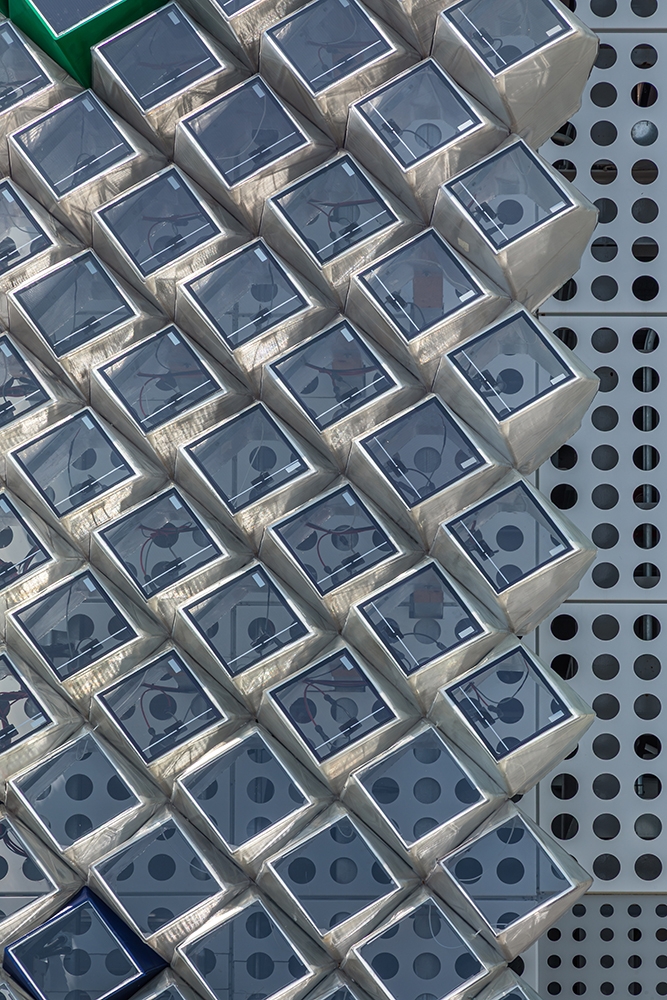
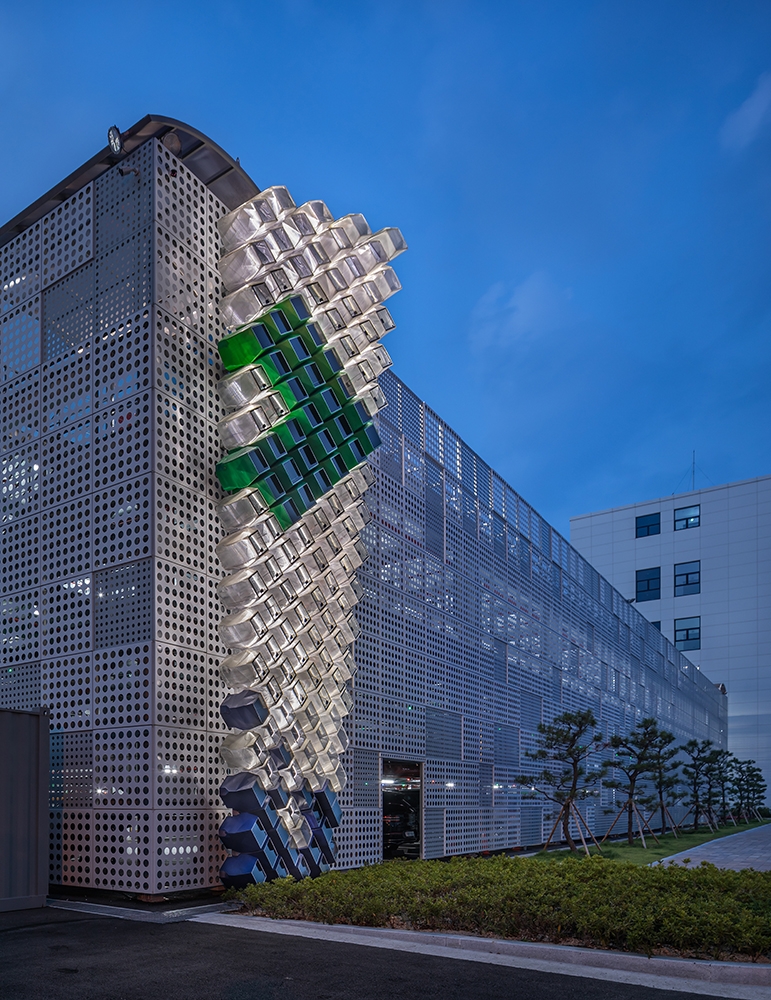
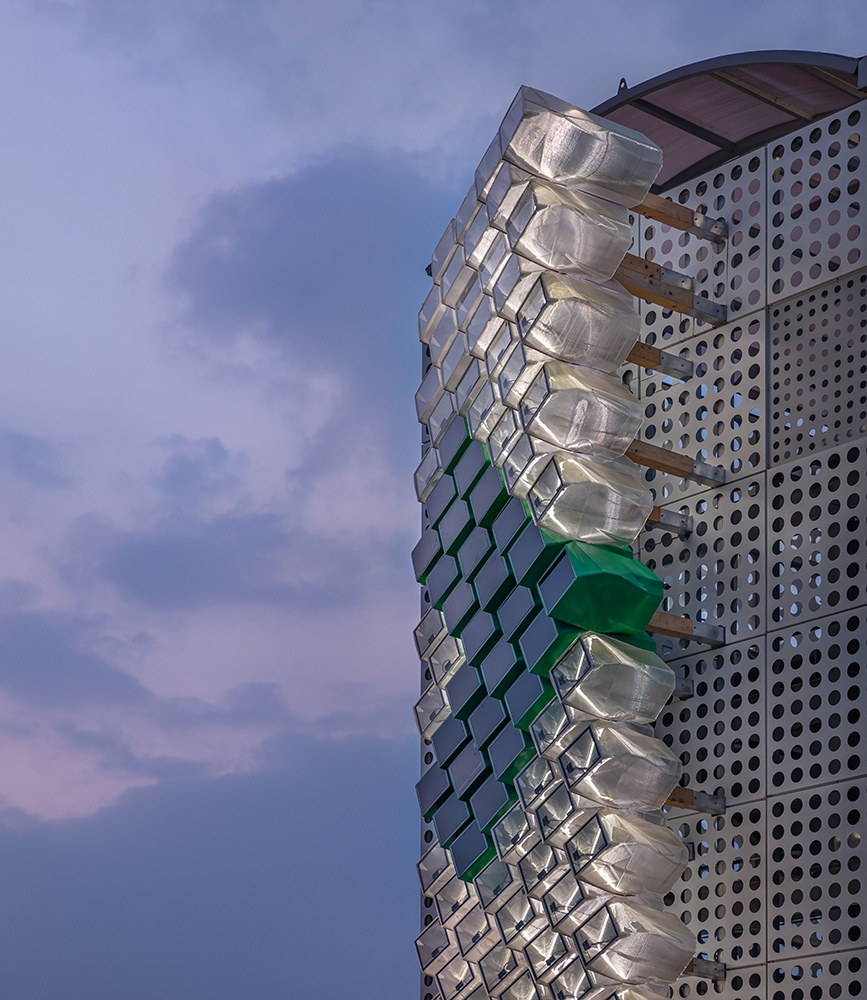
A flat solar panel is easy to manufacture and hard to integrate into a curved building façade. VINE is a curved, multi-angle building-integrated photovoltaic (BIPV) module developed by Professor Beom Kwan Kim’s studio at the University of Ulsan with 3D Factory. Its geometry follows the façade, with each module 3D printed to match. The project won Construction Product Design of the Year at the BLT Built Design Awards.

Aibuild CAM, an Aibuild software for large format additive manufacturing (LFAM) build preparation and toolpath generation, was used to generate and evaluate the fabrication toolpaths behind it.
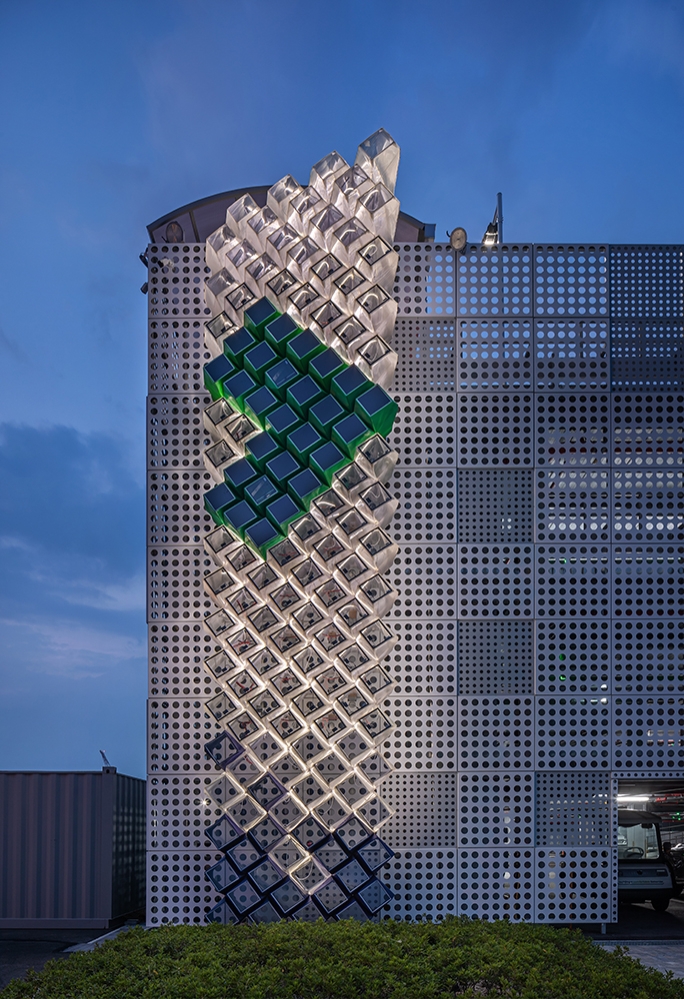
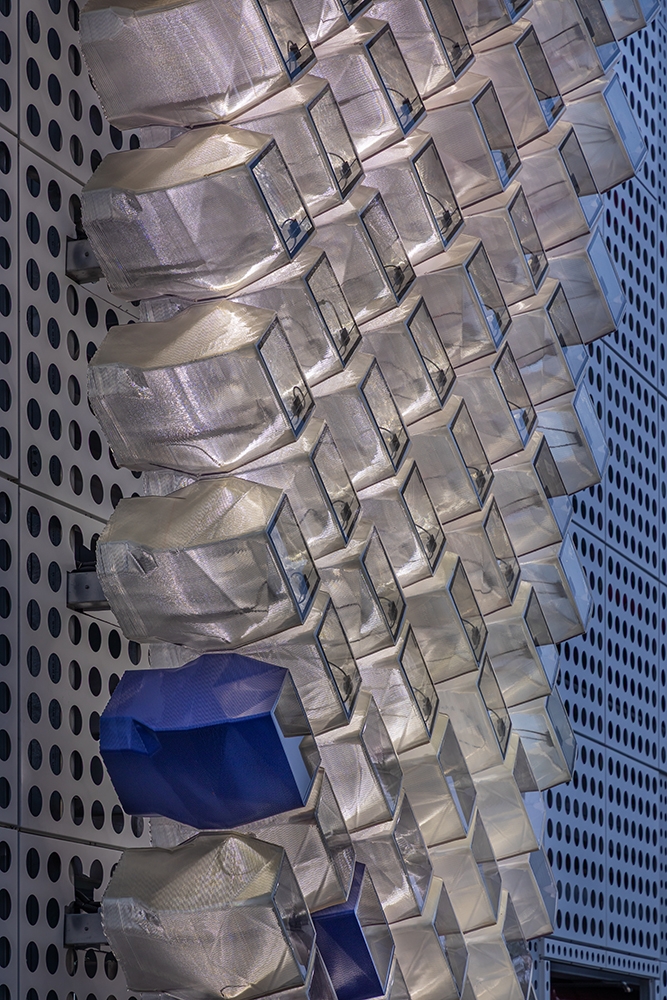
Turning a non-standard curve into a manufacturable part.

Architecture and design research keeps running into the same problem, a complex, non-standard geometry looks fine as a digital model but is hard to translate into a full-scale physical object. VINE’s curved, multi-angle surfaces were exactly that kind of geometry, designed to work as an active façade element rather than a flat add-on.

Professor Beom Kwan Kim’s research studio at the University of Ulsan used Aibuild CAM to bridge that gap, reviewing fabrication conditions in simulation before printing. For each module block, the team assessed toolpaths, deposition direction and printing parameters suited to its geometry, rather than applying one fixed strategy to every part.

Printed in ABS and PETG on a KUKA arm with a custom extruder.

The modules were printed in ABS and PETG, on a KUKA KR 210 R2700-2 robot fitted with a custom-built extruder developed in-house by 3D Factory, a Korean company specialising in large-scale additive manufacturing hardware. Layer stability, printing angle and geometry all had to be considered together for each block, which is where the simulation step in Aibuild CAM did its work before the robot ever moved.

Design was led by Professor Beom Kwan Kim of Studio Kwan. Supported by Korea East-West Power (EWP), the project was jointly carried out by his University of Ulsan research team and 3D Factory. The completed system is installed as a demonstration at HD Hyundai Construction Equipment.

An award-winning result, with a real performance claim behind it.

VINE’s BLT Built Design Awards submission states that its curved, multi-angle modules achieve nearly double the summer efficiency of conventional flat silicon panels, a result of solar path simulation shaping the module geometry itself. That figure comes from the award submission rather than the University’s own case study notes, so treat it as a claim made publicly at the awards rather than an independently verified benchmark.

Why this matters for BIPV design.

Conventional solar panels are flat because flat is what’s easy and cheap to manufacture at scale, not necessarily what suits a curved building façade or an optimal solar angle. Large format additive manufacturing removes that constraint. Once a module’s geometry can be printed directly, curvature and orientation become design decisions again, not compromises forced by the manufacturing process.

Why we're glad to be part of this.

VINE is a strong example of what research and industry can build together when the fabrication process keeps up with the design ambition. We’re glad Aibuild CAM helped the University of Ulsan and 3D Factory turn a genuinely difficult geometry into a working, award-winning façade system, and we’re looking forward to seeing where this research goes next.

FAQ

What is VINE?

VINE is a curved, multi-angle building-integrated photovoltaic (BIPV) module developed by the University of Ulsan with 3D Factory, designed to be integrated into building façades and 3D printed using Aibuild CAM.

What materials and hardware were used to print VINE's modules?

The modules were printed in ABS and PETG on a KUKA KR 210 R2700-2 robot fitted with a custom-built extruder developed by 3D Factory, specifically for large-scale additive manufacturing.

What role did Aibuild CAM play in the VINE project?

Aibuild CAM was used to generate and evaluate fabrication toolpaths for each module, letting the University of Ulsan compare different deposition strategies in simulation before printing non-standard, curved geometries.

Has VINE won any awards?

Yes. VINE received the Construction Product Design of the Year award at the BLT Built Design Awards, recognising both its design and its fabrication approach.

Why use large format additive manufacturing for solar façade modules instead of flat panels?

Large format additive manufacturing allows curved, multi-angle modules to be printed directly to a building façade's geometry, rather than being limited to the flat panels that conventional manufacturing makes easiest to produce.

About Beom Kwan Kim

Beom Kwan Kim is a South Korean architect, designer and researcher working across architecture, industrial design and advanced digital fabrication. An Honours graduate of the Architectural Association (AA School, London, 2012), he is a Professor at the College of Architecture & Design, University of Ulsan, and leads Studio Kwan. His research spans robotic fabrication, timber architecture and energy-generating facades. VINE received the 2025 BLT Construction Product Design of the Year, 2025 IDA Bronze (Product Design), 2026 Asia Design Prize Winner and two 2026 DNA Paris Design Awards. The Wave received the 2026 Korea Wood Architecture Awards Grand Prize.

Email: [email protected]
Office: +82 52 259 2707
LinkedIn: linkedin.com/in/beomkwankim
Instagram: instagram.com/beomkwankim

About 3D Factory

3D Factory is a Korean company specialising in 3D printing technologies, including custom-built extruders developed in-house for large-scale additive manufacturing.