Dakacom's DXL lab prints a chair from coffee waste and PLA

20 October 2026
Author: Aimee-May Graham

User success by Dakacom

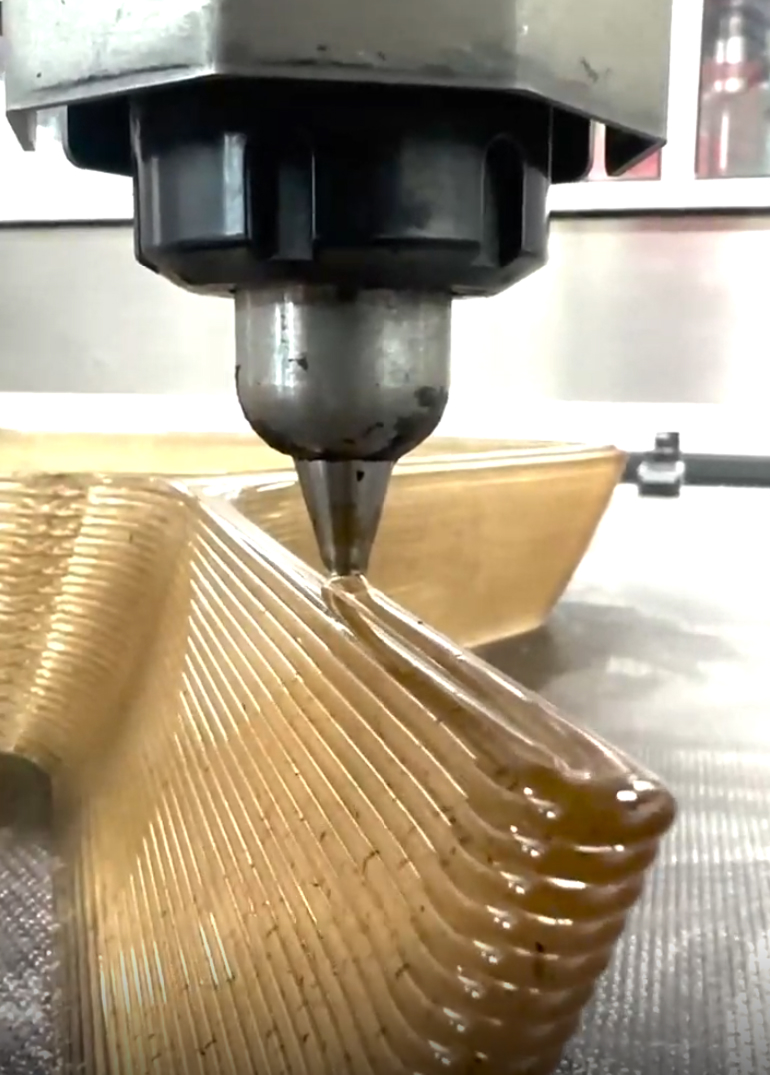
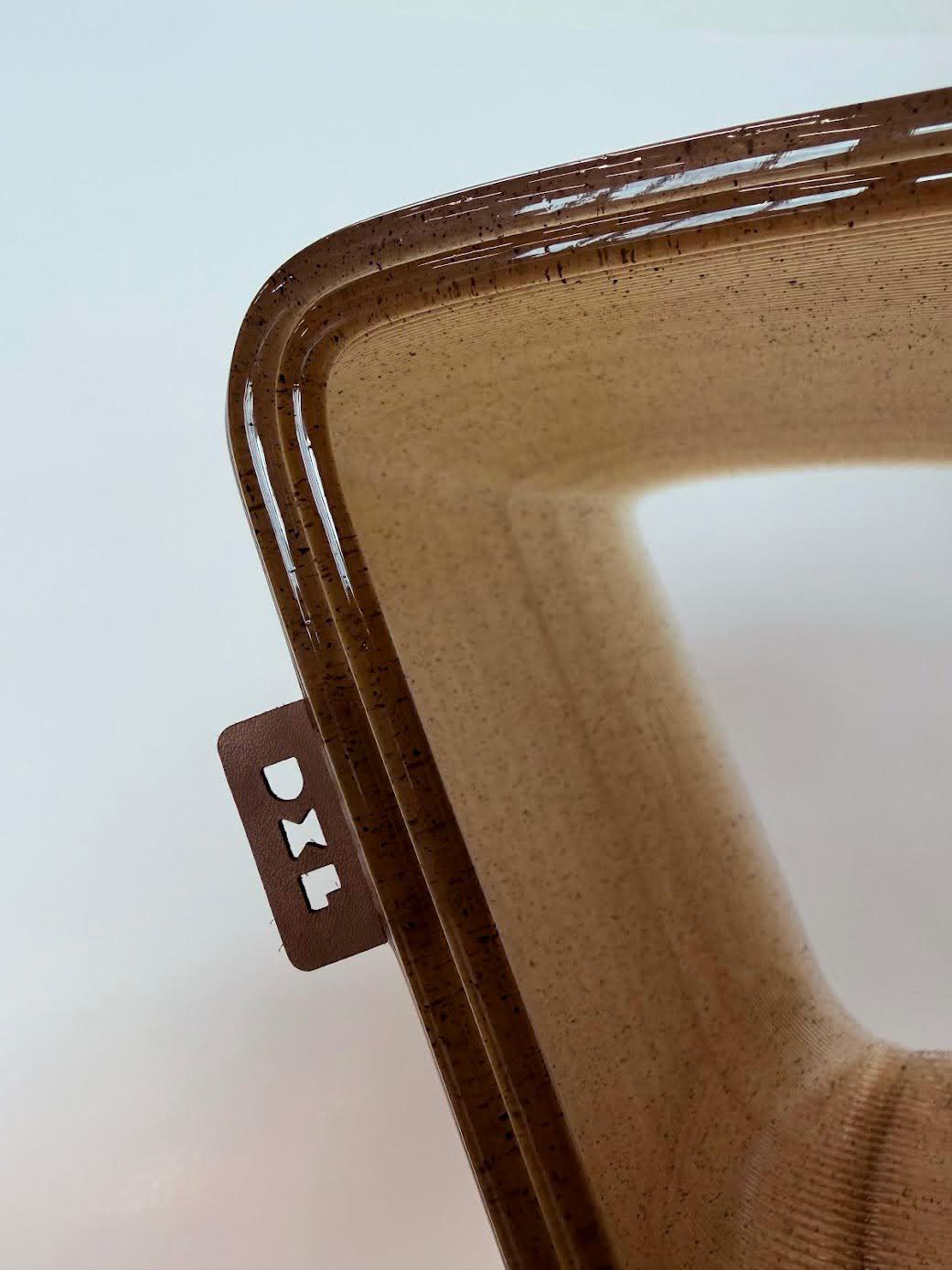
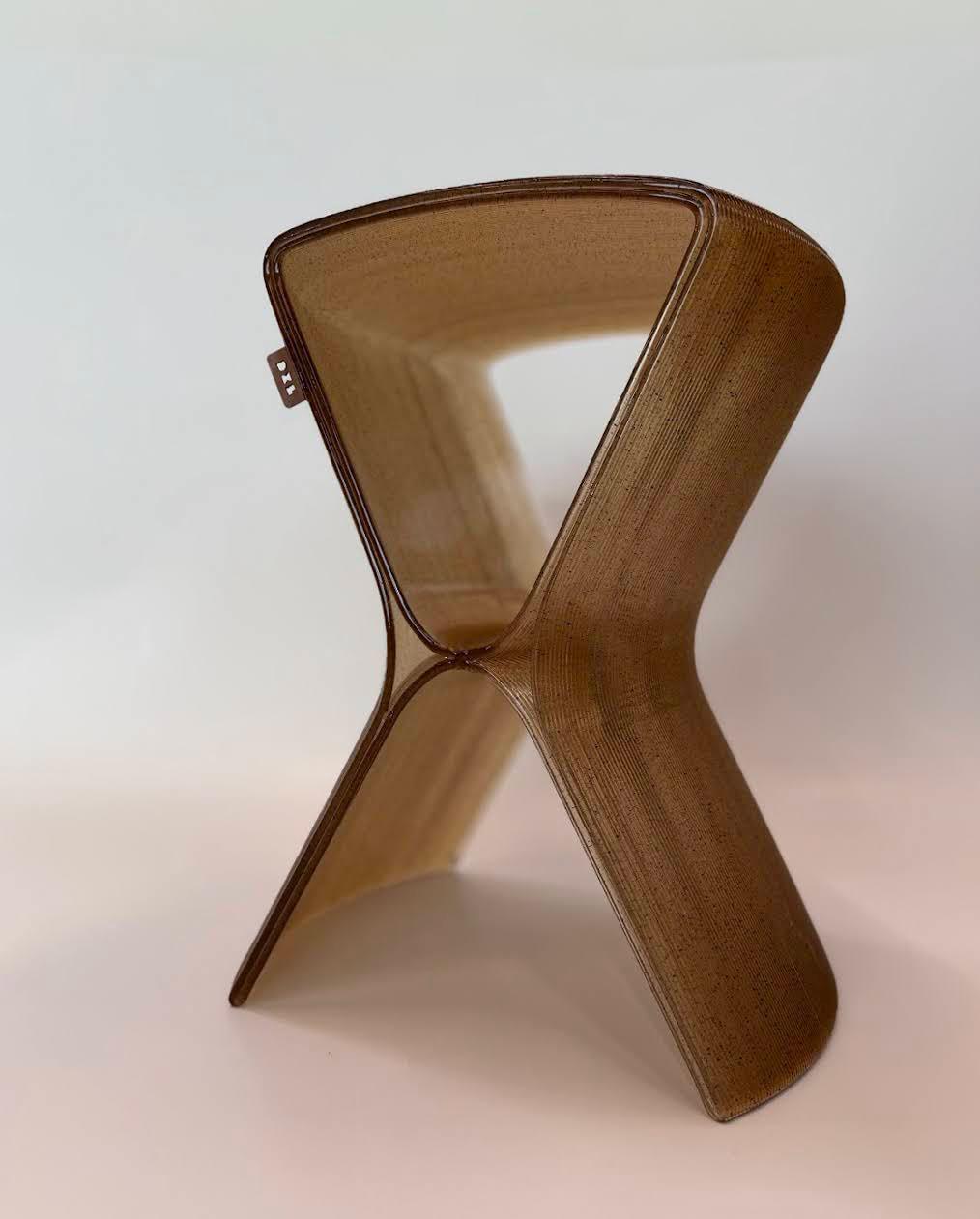
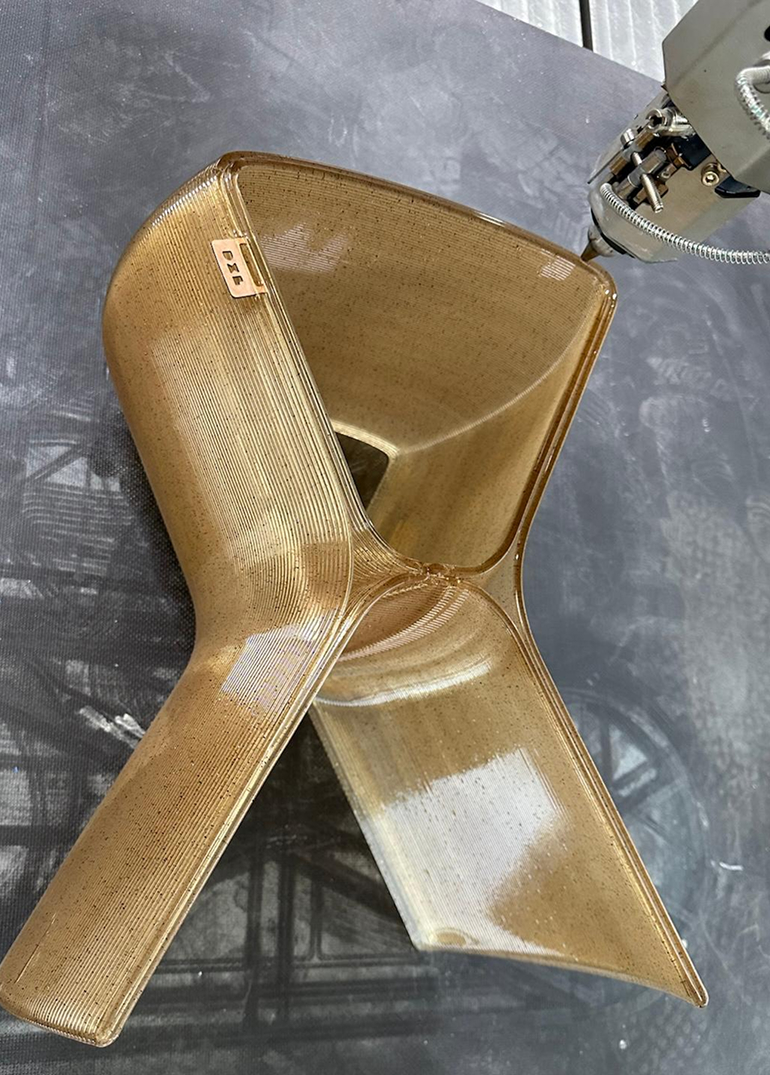
It started over a cup of coffee. At Dakacom’s DXL lab, an experimental design section built around finding a second life for waste materials, the team wondered what would happen if spent coffee grounds went into a 3D print instead of the bin. The result is Loop, a small interior/exterior chair 3D printed from a blend of PLA and dried coffee waste using large format additive manufacturing (LFAM).

Aibuild CAM, an Aibuild software for large format additive manufacturing build preparation and toolpath generation, was used to prepare and print Loop.

An interlacing technique built for both strength and looks

The design challenge behind Loop was an experimental interlacing technique, developed by the DXL team to combine structural performance with a refined aesthetic. Ergonomics, flowing organic forms and a distinctive layered pattern come together so that the engineering itself becomes the chair’s visual signature, rather than something hidden inside a finished surface.

Loop was designed from the ground up for LFAM, shaped around what the process can do rather than adapted from an existing product.
Giving coffee waste a second life in PLA

DXL regularly experiments with printing raw waste and mixing materials, aiming to build functional, unique designs while putting discarded material to use. Loop grew directly out of that habit: dried coffee grounds were mixed into PLA and printed as the chair’s structure.

The material choice adds a visual effect too. When sunlight hits the finished chair, the structure shifts with the light and the small flecks of coffee inside the print become visible, a detail the DXL team specifically points to as one of their favourite parts of the piece.

Printed on a Belotti machine with a CEAD S25 extruder

Loop was printed on a Belotti machine fitted with a CEAD extruder S25. Aibuild has worked with CEAD’s hardware for years, and Loop, printed on a Belotti machine, shows why, delivering reliable, large format deposition of an experimental waste-based material that keeps pace with the design rather than constraining it.

DXL had already been working with Aibuild CAM before this project and chose it again here for the same reason, it’s the workflow they know, and they find it intuitive for translating an experimental design into a printable toolpath.

Key stats:

● Material: PLA mixed with dried coffee waste
● Print time: 3 hours
● Nozzle diameter: 4mm
● Dimensions: 465mm (height) x 380mm (width)
● Weight: 5.61kg

Why this matters for experimental design

A chair like Loop only exists because of LFAM. Injection moulding or conventional furniture production would need tooling built around a fixed material and a fixed run size, neither of which suits a one-off design built around reused waste and a hand-mixed composite.

LFAM removes that constraint. DXL could design directly for the print process, test a genuinely new material combination, and produce a finished, functional chair without a single mould.

Why we're glad to be part of this

Loop is exactly the kind of project that shows what LFAM can do beyond production parts: taking a waste material nobody else wanted and turning it into a chair people want to sit in and look at. We’re glad Aibuild CAM and our partners at CEAD could help the DXL team get there, and we’re looking forward to seeing what they print next.

FAQ

What is the Loop chair made from?

The Loop chair is 3D printed from a mix of PLA and dried coffee waste, developed by Dakacom's DXL lab as part of their work reusing waste materials in functional design.

What hardware was used to print Loop?

Loop was printed with a CEAD extruder S25, with the toolpath and print preparation handled in Aibuild CAM.

Can 3D printing use recycled or waste materials like coffee grounds?

Yes. Large format additive manufacturing can print composite materials such as PLA mixed with dried coffee waste, as demonstrated by the Loop chair, though the waste material typically needs to be dried and blended with a base polymer before printing.

How long did the Loop chair take to print?

The Loop chair took 3 hours to print, using a 4mm nozzle diameter.

Why design a chair specifically for LFAM instead of conventional manufacturing?

Large format additive manufacturing lets designers work directly with experimental materials
and one-off geometries without the tooling and minimum run sizes that conventional methods like injection moulding require.

About Dakacom

Dakacom is a Czech production company based in Nupaky, offering printing, 3D printing, plastic work and corrugated materials for brands across the EMEA region since 1999. DXL is Dakacom’s experimental design section.

About CEAD

CEAD B.V. manufactures large format 3D printing systems, including robot-based Flexbot printers and gantry-based Flexcube solutions, along with pellet extruders for thermoplastic composite production. The company is headquartered in Delft, Netherlands.