Teaching the full manufacturing chain. How FHNW brings industrial AM into the classroom

30 September 2026
Author: Aimee-May Graham

User success by FHNW

"We want them to understand the complete process chain, not how to press the print button,"
Prof. Dr.-Ing. Christian Brauner, who leads the additive manufacturing programme at IKT, part of FHNW's School of Computer Science, Technology and Engineering in Windisch, Switzerland.

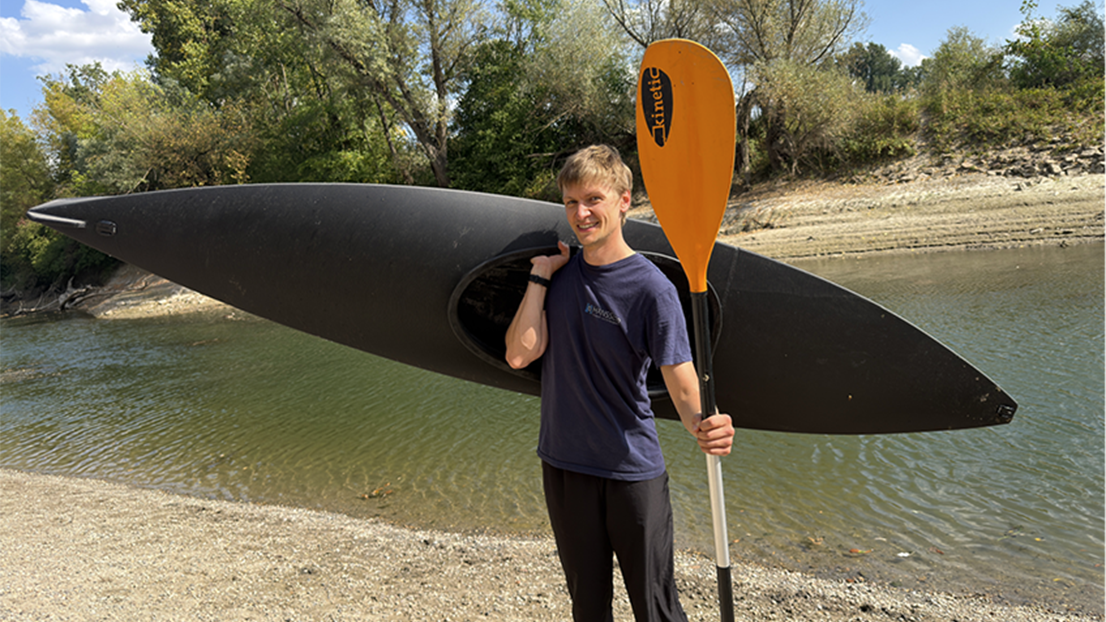
Most additive manufacturing courses teach students how to operate a 3D printer. FHNW’s Institute of Polymer Engineering (IKT) wanted its students to understand something broader: the complete digital manufacturing chain, from CAD design and material selection through to toolpath generation, process parameters and the finished part.

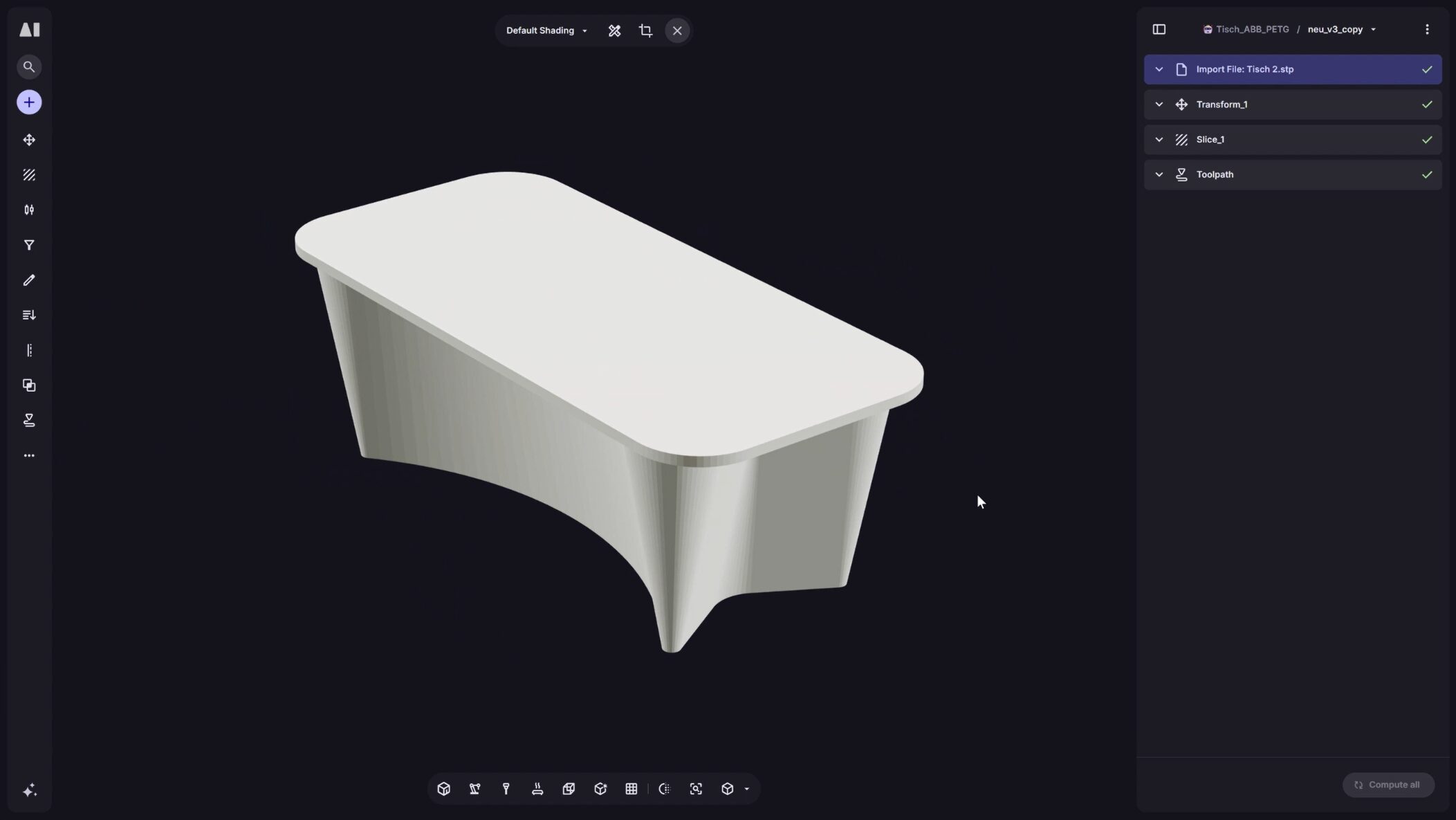
Aibuild CAM, an Aibuild software for large format additive manufacturing (LFAM) build preparation and toolpath generation, is now built into that teaching.

Treating the slicer as something to investigate, not a black box.

Conventional desktop-printing workflows don’t reflect how industrial additive manufacturing actually works. So instead of handing students a slicer and a “print” button, IKT has them work through the full industrial sequence: CAD design, build preparation, toolpath strategy, process parameters, manufacturing, and part evaluation.

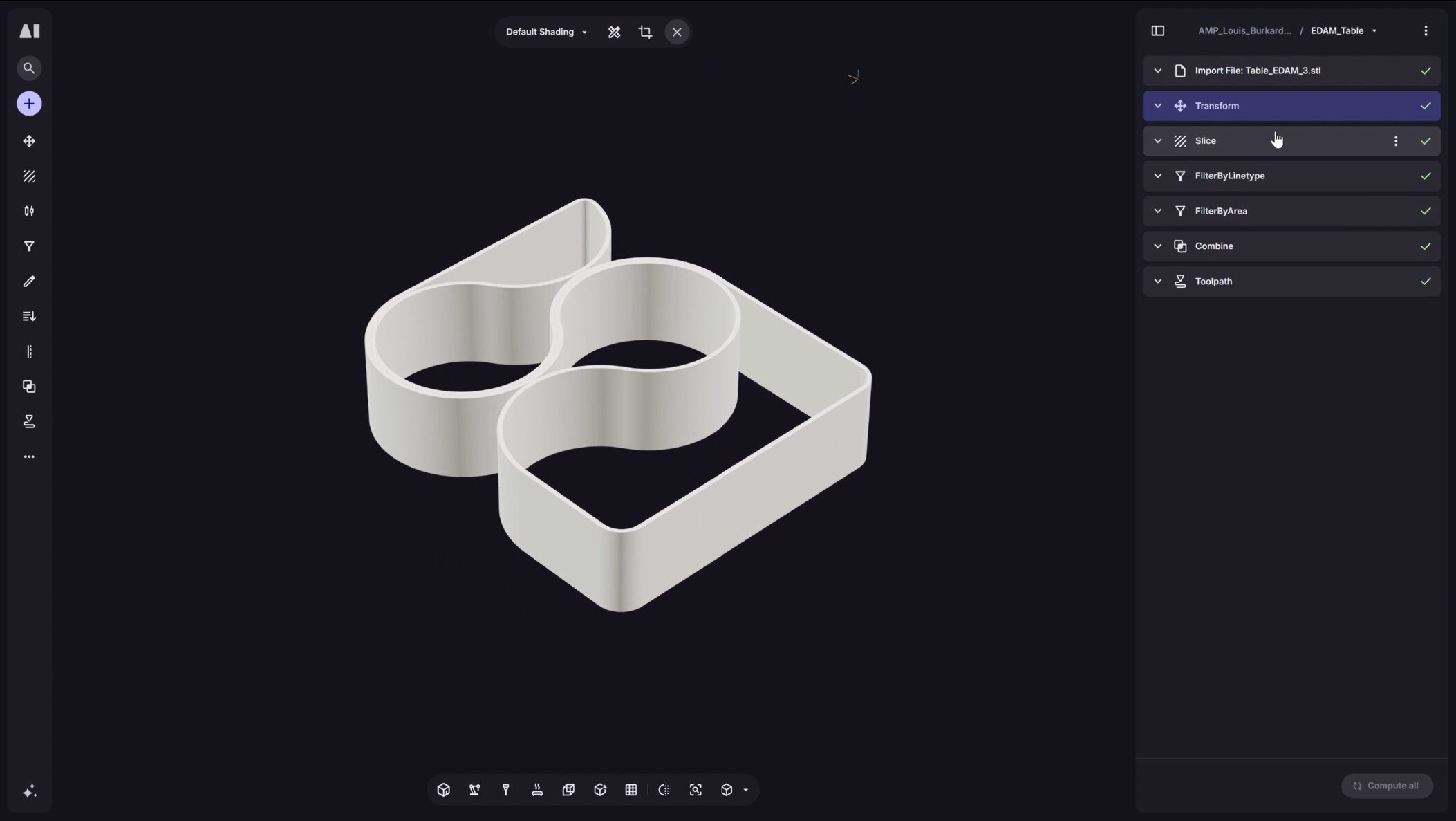
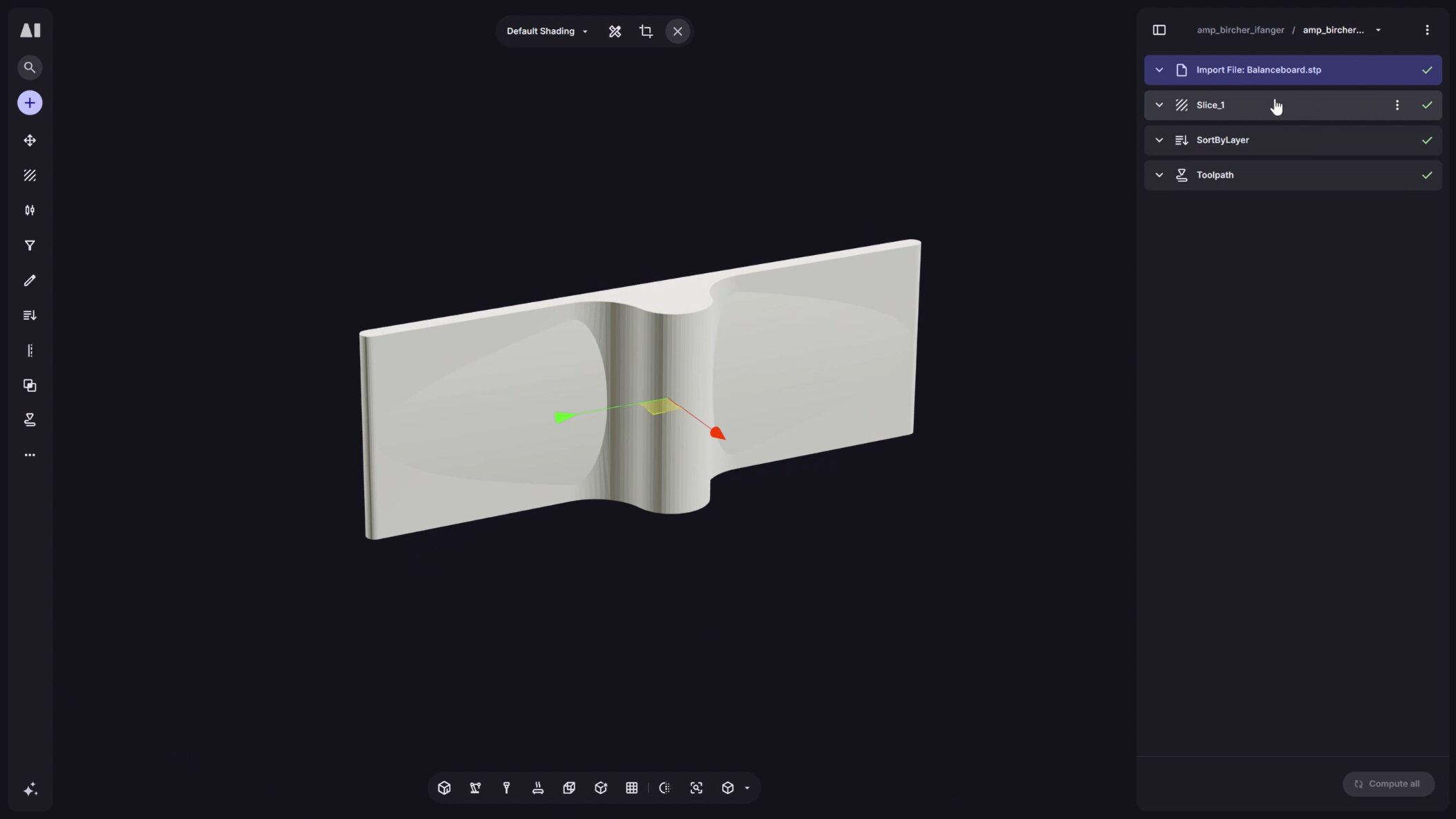
Using Aibuild CAM at each of these stages lets students see, directly, how a digital decision changes the physical outcome of a print.
Learning by experimenting.

Rather than following predefined printing recipes, students are set engineering questions: how should a part be oriented, which deposition strategy suits the geometry, how do layer height and extrusion parameters interact, where are the critical starts and stops in a toolpath, and how does all of this affect mechanical performance.

The aim is for students to understand why a manufacturing strategy works, or why it doesn’t, rather than simply running one.

Closing the loop between the digital plan and the physical part.

Once a strategy is defined, students print the part and evaluate it: comparing the planned toolpath against the actual deposition, and investigating defects, dimensional accuracy, surface quality and manufacturing efficiency.

That plan-manufacture-observe-analyse-improve loop is, according to Brauner, the most significant change Aibuild CAM has brought to the course. It’s not simply another piece of software for students to learn. It changes how they approach additive manufacturing in the first place, building skills in digital manufacturing, toolpath engineering, process development, design for additive manufacturing, and diagnosing unsuccessful builds as engineering problems rather than failed prints.

Why this matters for engineering education.

A desktop printer with a fixed slicer setting can teach someone to produce a part. It can’t teach them why a toolpath choice affects strength, or why a print fails under load. By giving students the same build preparation and toolpath tools used in industrial LFAM, IKT closes that gap: the challenges students meet in the lab are close to the ones they’ll meet in industry, while still having the room to experiment and learn from failed builds that a live production environment wouldn’t allow.

What FHNW sees as the impact.

FHNW’s own assessment of what’s changed for their students, in their words:

● Deeper process understanding — students see the connection between toolpath strategy and manufacturing behaviour.

● More active learning — students develop, test and improve their own manufacturing strategies.

● Greater industrial relevance — education is based on tools and workflows representative of advanced additive manufacturing.

● Improved problem-solving skills — unsuccessful builds become engineering problems to analyse rather than simply failed prints.

● Digital manufacturing competence — students gain experience connecting CAD, software, process parameters, equipment and physical components.

Why we're glad to be part of this.

FHNW’s approach reflects something we care about at Aibuild: additive manufacturing is an engineering process, not a button to press. We’re glad Aibuild CAM is giving IKT’s students a genuine, hands-on route into that process, and we’re looking forward to seeing where they take it.

FAQ

What is Aibuild CAM used for in additive manufacturing education?

Aibuild CAM is used at FHNW's Institute of Polymer Engineering to teach students the full digital manufacturing chain for large format additive manufacturing, from build preparation and toolpath strategy through to process parameters and part evaluation, rather than just how to operate a 3D printer.

Why teach toolpath generation instead of just slicing?

Because in industrial additive manufacturing, the toolpath is an engineering parameter, not just an automated output of the slicer. Understanding it lets students connect design decisions to mechanical performance and manufacturing quality.

How does Aibuild CAM support project-based learning in engineering courses?

It gives students a real build preparation and toolpath engineering environment to test manufacturing strategies, print the result, and compare the planned process against the actual part, an iterative plan-manufacture-observe-analyse-improve workflow rather than a one-shot print exercise.

About FHNW

FHNW is one of Switzerland’s leading universities of applied sciences and arts, with around 15,000 students across 10 schools, including the Institute of Polymer Engineering (IKT) within its School of Computer Science, Technology and Engineering in Windisch.